
-
Starting today August 7th, 2024, in order to post in the Married Couples, Courting Couples, or Singles forums, you will not be allowed to post if you have your Marital status designated as private. Announcements will be made in the respective forums as well but please note that if yours is currently listed as Private, you will need to submit a ticket in the Support Area to have yours changed.
-
CF has always been a site that welcomes people from different backgrounds and beliefs to participate in discussion and even debate. That is the nature of its ministry. In view of recent events emotions are running very high. We need to remind people of some basic principles in debating on this site. We need to be civil when we express differences in opinion. No personal attacks. Avoid you, your statements. Don't characterize an entire political party with comparisons to Fascism or Communism or other extreme movements that committed atrocities. CF is not the place for broad brush or blanket statements about groups and political parties. Put the broad brushes and blankets away when you come to CF, better yet, put them in the incinerator. Debate had no place for them. We need to remember that people that commit acts of violence represent themselves or a small extreme faction.
You are using an out of date browser. It may not display this or other websites correctly.
You should upgrade or use an alternative browser.
You should upgrade or use an alternative browser.
.
- Thread starter jimmyjimmy
- Start date


Michael Scaman
Active Member
I take the Bible in the sense it claims, in the sense of the literature. But I find it's claims to be very very very high.
There might be disagreement in what sense the literature is claiming, Proverbs, for example. Some say (RC SProul) Proverbs are rules of thumb like truisms or maxims I suppose. Others (Bruce Waltke) says Proverbs are 100% true in ensamble and the qualify eachother. I would agree with both, if you look at a proverb by itself it's like a rule of thumb but taken together 100% true in ensemble.
Example? Near the end Proverbs says 'do not answer a fool in the way of his folly' and a couple verses later 'answer a fool in the way of his folly'
Taken together they are true don't lower yourself to be like a fool in his folly but be wise and wisely and appropriately explain and warn the fool the way of his folly, not lowerering yourself to be like him And near it there is a statement proverbs is a riddle.... so .... think things through and wisely apply
There might be disagreement in what sense the literature is claiming, Proverbs, for example. Some say (RC SProul) Proverbs are rules of thumb like truisms or maxims I suppose. Others (Bruce Waltke) says Proverbs are 100% true in ensamble and the qualify eachother. I would agree with both, if you look at a proverb by itself it's like a rule of thumb but taken together 100% true in ensemble.
Example? Near the end Proverbs says 'do not answer a fool in the way of his folly' and a couple verses later 'answer a fool in the way of his folly'
Taken together they are true don't lower yourself to be like a fool in his folly but be wise and wisely and appropriately explain and warn the fool the way of his folly, not lowerering yourself to be like him And near it there is a statement proverbs is a riddle.... so .... think things through and wisely apply
Last edited:
Upvote
0


Radrook
Well-Known Member
- Feb 25, 2016
- 11,539
- 2,726
- Country
- United States
- Gender
- Male
- Faith
- Non-Denom
- Marital Status
- Single
I'm glad you brought this up. I always get nervous when someone shares a verse and in the intro they explain that the HS led them into understanding the verse. But several people in the room see it differently. But the HS will lead us into all truth! Well, then why do we see through a glass dimly? I trust the HS but I don't trust myself and don't put my trust in others (for understanding the Bible). Yet Iron sharpens Iron so clearly we need each other and learn from each other. The answer is to be a good Berean and study those things for oneself.
I hope that all makes sense.
Absolutely true!
Extreme caution is needed when we are presented with scriptural interpretations.
Unfortunately, humans have a knack for deftly stringing biblical scriptures together to create the illusion that they support one another and the fervent claims of the persons citing them. It is a very bitter experience to realize after a lifetime of unwavering conviction that others have done the same textual manipulation to create the illusion of biblical support for concepts contrary to our own and seemingly as equally convincing.
Last edited:
Upvote
0
StTruth
Well-Known Member
- Aug 6, 2016
- 506
- 233
- Gender
- Male
- Faith
- Christian
- Marital Status
- Single
Old books inherently have errors? I'm curious as to how you distinguish what the errors are. Would you mind sharing?
Hi thatbrian,
Thanks for your comment. Old books have a higher likelihood of erroneous views because older people didn't know any better. They didn't know much about science and so they may see a mental illness as a case of demon possession. A good example is the description in one of the Gospels about epilepsy and the conclusion was drawn that the patient had a demon in him. I'm not blaming people of yore. If we lived in their times, we too would make the same errors.
But the Bible is riddled with more mistakes because it's written by different people with different sets of agenda. So we have different books telling different stories and it's amusing when apologists try in vain to reconcile all the contradictions to the point that some of their attempts can be pretty hilarious. I'm not denigrating the Bible which means a lot to me. I'm merely explaining why these errors are there.
You also asked how I distinguish what the errors are. This is quite simple. We look for contradictions. But apologists will come to the Bible's defence by saying that where there are contradictions, the two accounts in the different gospels (for example) actually refer to two different events. That makes it difficult to establish there was an error in the first place. So, the right thing to do is to pick events that only happened once. Where there are contradictions, apologists can no longer say they are separate events.
A good example would be the birth of Jesus. St Matthew's evangelist who was probably not a Jew (the tradition that St Matthew wrote it is just a fable) could not understand the Hebrew Old Testament and used the Septuagint which is badly translated. Hence the almah-parthenos mistranslation led to the evangelist cooking up the story of the Virgin birth.
There are many other examples such as the entry into Jerusalem but I shouldn't hog this thread.
Cheers,
St Truth.
Upvote
0

- Nov 29, 2011
- 8,530
- 4,780
- Country
- United States
- Faith
- Christian
- Marital Status
- Married
- Politics
- US-Democrat
Absolutely true!
Extreme caution is needed when we are presented with scriptural interpretations.
Unfortunately, humans have a knack for deftly stringing biblical scriptures together to create the illusion that they support one another and the fervent claims of the persons citing them. It is a very bitter experience to realize after a lifetime of unwavering conviction that others have done the same textual manipulation to create the illusion of biblical support for concepts contrary to our own and seemingly as equally convincing.
Absolutely true!
Upvote
0
- Nov 29, 2011
- 8,530
- 4,780
- Country
- United States
- Faith
- Christian
- Marital Status
- Married
- Politics
- US-Democrat
Hi thatbrian,
Thanks for your comment. Old books have a higher likelihood of erroneous views because older people didn't know any better. They didn't know much about science and so they may see a mental illness as a case of demon possession. A good example is the description in one of the Gospels about epilepsy and the conclusion was drawn that the patient had a demon in him. I'm not blaming people of yore. If we lived in their times, we too would make the same errors.
But the Bible is riddled with more mistakes because it's written by different people with different sets of agenda. So we have different books telling different stories and it's amusing when apologists try in vain to reconcile all the contradictions to the point that some of their attempts can be pretty hilarious. I'm not denigrating the Bible which means a lot to me. I'm merely explaining why these errors are there.
You also asked how I distinguish what the errors are. This is quite simple. We look for contradictions. But apologists will come to the Bible's defence by saying that where there are contradictions, the two accounts in the different gospels (for example) actually refer to two different events. That makes it difficult to establish there was an error in the first place. So, the right thing to do is to pick events that only happened once. Where there are contradictions, apologists can no longer say they are separate events.
A good example would be the birth of Jesus. St Matthew's evangelist who was probably not a Jew (the tradition that St Matthew wrote it is just a fable) could not understand the Hebrew Old Testament and used the Septuagint which is badly translated. Hence the almah-parthenos mistranslation led to the evangelist cooking up the story of the Virgin birth.
There are many other examples such as the entry into Jerusalem but I shouldn't hog this thread.
Cheers,
St Truth.
If the Bible is full of "mistakes" then what are your criteria? If you judge by some system of logic then I suggest that you read the section in 1 Corinthians 1 where Paul wrote about "the intelligence of the intelligent".
The Bible is a collection of books of divine knowledge and wisdom that is beyond the rules of logic. For example, why do you think there are four gospels? They're not an "official biography of Jesus" but different ways of explaining who Jesus was so that, taken in their entirety, give us a far greater portrait of the man than would be possible otherwise.
It's like looking at an abstract work art and saying that it's not well done because it doesn't look like a photograph, that there are errors in it. In order for greater truths to be revealed, God chose to fill the writers with the Holy Spirit so that, even thousands of years after they were written, the works of the Bible speak to men and women in ways that no other library of works ever has, and probably never will.
Upvote
0
StTruth
Well-Known Member
- Aug 6, 2016
- 506
- 233
- Gender
- Male
- Faith
- Christian
- Marital Status
- Single
How do you know this?
How do you know this?
How do you know this?
What are your sources for these claims?
Do you believe in the virgin birth of Christ?
Hi thatbrian,
Thanks for your response. I'll answer your questions. The Gospel of St Matthew is named by church tradition. The original had no name. There is question as to whether the copy we have today is the original. That's because Papias tells us that he heard that a gospel was written in the name of St Matthew and it was in the Hebrew tongue. Papias also says that it was variously translated into Greek but he implied that the translations were done by all kinds of unqualified people and it was difficult to ensure the accuracy. My source; FF Bruce, The Canon of Scripture and Bruce Metzger, The Canon of the New Testament. I read both books during the long holidays.
That the writer of St Matthew was probably a Hellenistic Christian who knew no Hebrew is what many scholars have stated. When St Matthew tells us that it was prophesied that 'a virgin shall be with child', he was quoting precisely from the Septuagint. The Septuagint is a Greek translation of the Old Testament but it's painfully inaccurate. That Isaiah prophecy that the Septuagint translates is a mistake. The original Hebrew Isaiah says that an 'almah' would be with child. Scholars have shown that 'almah' actually means a young woman and although virginity may be implicit in that most young women then were virgins (they didn't have me around - LOL, just joking), the concept of virginity is not a part of the prophecy. When the Septuagint translated almah as parthenos which is Greek for virgin, it's a mistranslation. But the evangelist of St Matthew took it to mean that virginity was an essential ingredient of the prophecy and so he cooked up the bit about Mary saying she had 'known no man'. My sources: I have read this in MANY books and internet sources but I can't put a finger in any one of them. I'm sure I've seen it either in one of Elaine Pagels' books or Bart Ehrman's books. I can't remember but it's a highly well-known fact - this mistranslation of the Septuagint and the consequent birth of the Virgin Birth teaching.
Finally, your question on my personal belief. I don't know what I believe. I've spoken to my mum. She thinks it's safer to believe in what the Church has decreed. I was an altar boy until recently so I know the liturgy very well. Whenever I say the Creed, I accept every word in my heart but when I sit down in my bedroom and think about it honestly, I can't mentally reconcile an obvious historical error with the reality of our Lord's virgin birth. But I'm willing always to accept the position of the Church and suspend my thoughts. I'm still young so I don't have to decide on these things yet. I will decide when I'm older.
Cheers,
StTruth
Upvote
0
StTruth
Well-Known Member
- Aug 6, 2016
- 506
- 233
- Gender
- Male
- Faith
- Christian
- Marital Status
- Single
If the Bible is full of "mistakes" then what are your criteria?
Hi pescador,
A mistake happens when there is a clear contradiction (eg some of the Gospel accounts) or when there is a clear belief in a superstition as if it were fact simply because the people then did not have the benefit of scientific development (eg the account of how Jacob - I think that was the chap - placed dots in front of a pregnant sheep and it gave birth to spotted lambs - but note, the writers were not to blame because genetics as a science was not known then) or a clear misunderstanding of actual events then which historians today question (eg the Romans always threw executed prisoners in a mass grave and would never allow the body to be placed in a private tomb), etc. Some mistakes are more difficult to prove but some can be proved without any reasonable dispute.
Cheers,
StTruth
Upvote
0
- Nov 29, 2011
- 8,530
- 4,780
- Country
- United States
- Faith
- Christian
- Marital Status
- Married
- Politics
- US-Democrat
Hi pescador,
A mistake happens when there is a clear contradiction (eg some of the Gospel accounts) or when there is a clear belief in a superstition as if it were fact simply because the people then did not have the benefit of scientific development (eg the account of how Jacob - I think that was the chap - placed dots in front of a pregnant sheep and it gave birth to spotted lambs - but note, the writers were not to blame because genetics as a science was not known then) or a clear misunderstanding of actual events then which historians today question (eg the Romans always threw executed prisoners in a mass grave and would never allow the body to be placed in a private tomb), etc. Some mistakes are more difficult to prove but some can be proved without any reasonable dispute.
Cheers,
StTruth
One thing that the Bible is not is a scientific textbook. It is easy to point out where the Bible and science disagree, and thereby miss the point of what is being said. How do you know that when Jacob "placed fresh-cut branches from poplar, almond and plane trees and made white stripes on them by peeling the bark and exposing the white inner wood of the branches" that God didn't trigger something in the sheep to make their lambs spotted? There is no possible scientific explanation to disprove this; it could have happened.
The Bible is a collection of sixty-six "books" to deliver God's message to people. That is its purpose. It is written to bring about faith in people; "faith is the substance of things hoped for, the evidence of things not seen." Understanding that last phrase will explain why empirical science has little to do with explaining the Bible.
Upvote
0
StTruth
Well-Known Member
- Aug 6, 2016
- 506
- 233
- Gender
- Male
- Faith
- Christian
- Marital Status
- Single
One thing that the Bible is not is a scientific textbook. It is easy to point out where the Bible and science disagree, and thereby miss the point of what is being said. How do you know that when Jacob "placed fresh-cut branches from poplar, almond and plane trees and made white stripes on them by peeling the bark and exposing the white inner wood of the branches" that God didn't trigger something in the sheep to make their lambs spotted? There is no possible scientific explanation to disprove this; it could have happened.
The Bible is a collection of sixty-six "books" to deliver God's message to people. That is its purpose. It is written to bring about faith in people; "faith is the substance of things hoped for, the evidence of things not seen." Understanding that last phrase will explain why empirical science has little to do with explaining the Bible.
Hi pescador,
Thanks for your reply. I agree the Bible should not be viewed that way. But the way the story of Jacob is told, it is very clear that there was no intervention by God. Because if there was, the Bible would have been very quick to add that God did it. When we read a text, there is a way to see what is really intended by the text. But someone can always try to add things into the plain text and assume something else that is not really there. But when I read the text honestly, I have to admit that some of these things are added on. Which is fine when I'm feeling religious and I can overlook anything. But when I'm not feeling religious, I can't help feeling that perhaps it's a mistake.
But I agree that Bible quotations are awesome. The Bible is second to none when it comes to getting the words just right. And sometimes we are persuaded that what is so stylishly put must be factually correct and true. Like what you quoted: "faith is the substance of things hoped for, the evidence of things not seen." It sounds really cool and the natural tendency is to say it must be correct. But when you forget its linguistic beauty and just look at what it says, it's usually a lot of verbiage that doesn't mean anything. That faith is the substance of things hoped for is something I can accept. There are many things we hope for but they won't happen the way we hope for. But when the Bible adds "the evidence of things not seen", it becomes a huge problem. If it's not seen, where is the evidence? Is there really evidence for faith? I have thought a great deal about this and I think there is none. So when the Bible says "the evidence of things not seen", I suppose it's the usual paradox that the Bible loves to come up with but when you think about it, it doesn't mean anything significant - it just contradicts itself but the church will call it a Mystery which sounds better. "The evidence of things not seen" is another way of saying there is no evidence but let's still call it evidence.
That's just what I think. What do you think?
Upvote
0

- Mar 18, 2014
- 38,117
- 34,056
- Country
- United States
- Gender
- Male
- Faith
- Christian
- Marital Status
- Married
You don't believe in the resurrection of Jesus Christ?Hi pescador,
A mistake happens when there is a clear contradiction (eg some of the Gospel accounts) or when there is a clear belief in a superstition as if it were fact simply because the people then did not have the benefit of scientific development (eg the account of how Jacob - I think that was the chap - placed dots in front of a pregnant sheep and it gave birth to spotted lambs - but note, the writers were not to blame because genetics as a science was not known then) or a clear misunderstanding of actual events then which historians today question (eg the Romans always threw executed prisoners in a mass grave and would never allow the body to be placed in a private tomb), etc. Some mistakes are more difficult to prove but some can be proved without any reasonable dispute.
Cheers,
StTruth

Upvote
0
StTruth
Well-Known Member
- Aug 6, 2016
- 506
- 233
- Gender
- Male
- Faith
- Christian
- Marital Status
- Single
You don't believe in the resurrection of Jesus Christ?
Of course I do. It's the crux of my religion. St Paul says that if there is no resurrection, the faith is useless. And he's right. It's impossible for someone to be a Christian and deny the resurrection of our Lord. That's just my view. I know a priest who doesn't believe in the resurrection and he's still a priest. So maybe my view is wrong. You can be a Christian but I don't know how. I think you've got to believe in other things too and not just simply reject the resurrection. Otherwise how can you be a Christian?
Upvote
0
Michael Scaman
Active Member
An almost superstision appraoch ... for example... just flipping open the Bible and reading the first verse is not a good way to read the Bible... but God is merciful and might use it despite that Every decision of the lot might be in the Lord's hands but we can come up with better ways to go through the Bible consistently, not picking favorites and skipping others
Upvote
0
- Mar 18, 2014
- 38,117
- 34,056
- Country
- United States
- Gender
- Male
- Faith
- Christian
- Marital Status
- Married
I asked based on you questioning the evidences in the NT gospels. It seemed you wrote off the Holy Scriptures as not authoritative and not inspired of God.Of course I do. It's the crux of my religion. St Paul says that if there is no resurrection, the faith is useless. And he's right. It's impossible for someone to be a Christian and deny the resurrection of our Lord. That's just my view. I know a priest who doesn't believe in the resurrection and he's still a priest. So maybe my view is wrong. You can be a Christian but I don't know how. I think you've got to believe in other things too and not just simply reject the resurrection. Otherwise how can you be a Christian?
Upvote
0
- Nov 29, 2011
- 8,530
- 4,780
- Country
- United States
- Faith
- Christian
- Marital Status
- Married
- Politics
- US-Democrat
Hi pescador,
Thanks for your reply. I agree the Bible should not be viewed that way. But the way the story of Jacob is told, it is very clear that there was no intervention by God. Because if there was, the Bible would have been very quick to add that God did it. When we read a text, there is a way to see what is really intended by the text. But someone can always try to add things into the plain text and assume something else that is not really there. But when I read the text honestly, I have to admit that some of these things are added on. Which is fine when I'm feeling religious and I can overlook anything. But when I'm not feeling religious, I can't help feeling that perhaps it's a mistake.
But I agree that Bible quotations are awesome. The Bible is second to none when it comes to getting the words just right. And sometimes we are persuaded that what is so stylishly put must be factually correct and true. Like what you quoted: "faith is the substance of things hoped for, the evidence of things not seen." It sounds really cool and the natural tendency is to say it must be correct. But when you forget its linguistic beauty and just look at what it says, it's usually a lot of verbiage that doesn't mean anything. That faith is the substance of things hoped for is something I can accept. There are many things we hope for but they won't happen the way we hope for. But when the Bible adds "the evidence of things not seen", it becomes a huge problem. If it's not seen, where is the evidence? Is there really evidence for faith? I have thought a great deal about this and I think there is none. So when the Bible says "the evidence of things not seen", I suppose it's the usual paradox that the Bible loves to come up with but when you think about it, it doesn't mean anything significant - it just contradicts itself but the church will call it a Mystery which sounds better. "The evidence of things not seen" is another way of saying there is no evidence but let's still call it evidence.
That's just what I think. What do you think?
I disagree. Faith isn't just a mental exercise of hoping that something might be true, it's the knowledge that it's actually true. For example, when one is asked "do you believe that God exists" some might answer "yes, that's what I believe" but the answer that I and others would give is "I know that God exists". Can God's existence be proven scientifically? No. But since I have been given the Holy Spirit I not only know that God exists, but that I have a real relationship with him. The evidence is within every believer that has been born from above (born again). I know that I am in Christ, that after my natural life on earth ends that I will be resurrected and live forever in God's kingdom.
On a more earthly level I know that I love my wife. It's not something that can be scientifically proven, as there is no evidence, but I know (and she knows) that it's real. (BTW we have been married for 47 years.) John wrote, "Beloved, let us love one another, because love comes from God. Everyone who loves has been born of God and knows God. Whoever does not love does not know God, because God is love."
Upvote
0
Michael Scaman
Active Member
There is also a contingency sometimes expressed: "If any man is willing to do His will he shall know of the teaching whether it is of God or of myself" Jesus in John 7
So... yes... not merely a mental exersize
So... yes... not merely a mental exersize
Upvote
0
samir
Well-Known Member
Are there some general rules we can use to help us in our understanding of God's word?
Yes, since scripture says Jesus and the Holy Spirit taught the apostles and they passed it along to others they appointed as bishops in the churches who then passed it along to their successors, it's important to interpret it in a way that agrees with the ancient Christian faith believed from the beginning. Since the church Jesus founded gave us the bible, it would be foolish to interpret it in a way that disagrees with the constant teaching of the church from the beginning.
Upvote
0
StTruth
Well-Known Member
- Aug 6, 2016
- 506
- 233
- Gender
- Male
- Faith
- Christian
- Marital Status
- Single
I disagree. Faith isn't just a mental exercise of hoping that something might be true, it's the knowledge that it's actually true. For example, when one is asked "do you believe that God exists" some might answer "yes, that's what I believe" but the answer that I and others would give is "I know that God exists". Can God's existence be proven scientifically? No. But since I have been given the Holy Spirit I not only know that God exists, but that I have a real relationship with him. The evidence is within every believer that has been born from above (born again). I know that I am in Christ, that after my natural life on earth ends that I will be resurrected and live forever in God's kingdom.
On a more earthly level I know that I love my wife. It's not something that can be scientifically proven, as there is no evidence, but I know (and she knows) that it's real. (BTW we have been married for 47 years.) John wrote, "Beloved, let us love one another, because love comes from God. Everyone who loves has been born of God and knows God. Whoever does not love does not know God, because God is love."
Hi pescador,
Thanks for your excellent reply. But I'm afraid I can't agree with you. And here's my reason.
The answer that you will give that you KNOW God exists while laudable in showing the extent of your belief does nothing in showing that God exists. It only shows that you believe a lot. But if you will forgive my saying this, it may very well be that you are mistaken in the belief however great that belief may be.
You also say that God's existence cannot be proved scientifically. I've been going through a lot of threads in this forum and I notice many Christians like to talk about scientific proof as if it's an earthly category of proving something and since God is more lofty, scientific proof means nothing to them. But this is a fallacy. Let's just drop 'scientific' from the equation. The fact is God cannot be proved at all. There is no evidence for God. To say that the evidence is in every believer means nothing. What's in every believer is belief, not evidence. Evidence cannot be in someone. By its very definition, evidence must be demonstrative of the thing it asserts so it can't be internal. It must be seen. That's what evidence means. What you mean is belief, not evidence. Yes, I agree that belief is in every believer.
You also say that your love for your wife cannot be proven as there is no evidence. You will pardon me for saying that that is totally wrong. There is evidence of love. I imagine the divorce courts do this all the time. They evaluate the evidence of love to see if the marriage has irretrievably broken down. I may be wrong here about the divorce courts but you know what I mean. There is evidence of love. But there is no evidence for God.
In fact (and I hope God will forgive me for this but I'm only being truthful) whatever available evidence seems to indicate His non-existence rather than his existence. You spoke about your love for your wife. I will pick that example but I will talk about imaginary people so you don't think I'm being impertinent. Tom and Anne are married. Supposing Tom sees Anne climbing a ladder and he knows one of the rungs is loose and will give way and she will fall. And he says NOTHING. The evidence shows that Tom does not love Anne. Anne will probably run to her parents crying and will start divorce proceedings against Tom because she now KNOWS from the evidence that Tom doesn't love her.
Tom's inaction is precisely what we see in God. There are countless times when people have stepped on loose rungs in ladders and fallen to their injury or even death and God did nothing to stop the person. Come on, don't ask me for actual examples. You know I'm telling the truth. I remember reading a news report that every minute a number of babies die (I can't remember the number but it was quite large) horrible painful deaths from things that are easily prevented. God does nothing.
It's wrong to say that God can't be proved scientifically and we cannot expect evidence for his existence. Of course we can. If God exists and he's loving, certain things must follow. That's just what my logical brain tells me. May God forgive me for saying all this but these are things that are apparent to me and not saying it out loud doesn't change the fact that I do think it and God in his omniscience must know it.
Cheers,
StTruth
Upvote
0

- Mar 23, 2004
- 249,113
- 114,215
- Faith
- Non-Denom
- Marital Status
- Private
- Politics
- US-Constitution
How to Read the Bible.
When i was delving into the book of Job, i found that sometimes, one of these is necessary.
It is written that when we dig into His Word, we will find hidden "treasure", which fits right into the verse below.
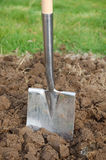
"Call unto me, and I will answer thee, and show thee great and mighty things, which thou knowest not." ~Jeremiah 33:3
"Calling unto God", is, in essence, delving/digging into His Word, as if we are seeking "hidden treasure", and the Holy Spirit "teaches" us what we did not know before, showing us "great and mighty" things that were "hidden" previously.
Precious.
When i was delving into the book of Job, i found that sometimes, one of these is necessary.
It is written that when we dig into His Word, we will find hidden "treasure", which fits right into the verse below.
"Call unto me, and I will answer thee, and show thee great and mighty things, which thou knowest not." ~Jeremiah 33:3
"Calling unto God", is, in essence, delving/digging into His Word, as if we are seeking "hidden treasure", and the Holy Spirit "teaches" us what we did not know before, showing us "great and mighty" things that were "hidden" previously.
Precious.
Upvote
0
Similar threads
- Replies
- 24
- Views
- 1K


- Replies
- 31
- Views
- 942


- Replies
- 6
- Views
- 376

- Replies
- 19
- Views
- 761


