

It’s regrettable the OP of this thread decided to close it down as it left a few unanswered questions particularly with regards to peer review.
One of the misconceptions of peer review if a work is published in a high quality journal such as Science or Nature then it is a rubber stamp for a paradigm change.
The peer review process can be summarized as follows.
 Nature’s criteria for publication are as follows;
(1) Provides strong evidence for its conclusions.
(2) Novel (we do not consider meeting report abstracts and preprints on community servers to compromise novelty).
(3) Of extreme importance to scientists in the specific field.
(4) Ideally, interesting to researchers in other related disciplines.
When a work is published in a high quality journal it is considered to be a trusted source.
Peer-reviewed work isn't necessarily correct, but meets the standards of science.
Once a work passes through peer review and is published, science must deal with it, by incorporating it into the established body of scientific knowledge, building on it further, figuring out why it is wrong, or trying to replicate its results.
The reason why this work on “The Correlation Between Solar Activity and Large Earthquakes” was published in Nature is that it meets Nature’s criteria.
The feedback from the scientific world however has not been entirely favourable and certainly does not signal a paradigm change.
By comparison Ben Davidson’s Earth capacitor model "Relationship Between M8+ Earthquakes Occurrences and the Solar Polar Magnetic Fields" fails even before the criteria are applied.
The reviewer will note the Earth’s magnetic field is a dipole approximation.

In the Earth capacitor model one can apply Maxwell’s 4th equation.
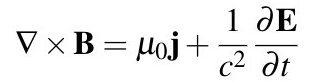
With j=0 since the Earth is an insulator, the magnetic B will instead circulate around the insulator as found in a capacitor.
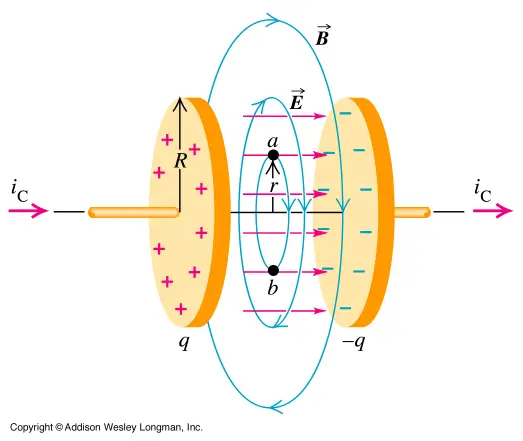 What this means is if the Earth is a capacitor, compasses would be useless as there are no magnetic poles!!!!
One of the misconceptions of peer review if a work is published in a high quality journal such as Science or Nature then it is a rubber stamp for a paradigm change.
The peer review process can be summarized as follows.
(1) Provides strong evidence for its conclusions.
(2) Novel (we do not consider meeting report abstracts and preprints on community servers to compromise novelty).
(3) Of extreme importance to scientists in the specific field.
(4) Ideally, interesting to researchers in other related disciplines.
When a work is published in a high quality journal it is considered to be a trusted source.
Peer-reviewed work isn't necessarily correct, but meets the standards of science.
Once a work passes through peer review and is published, science must deal with it, by incorporating it into the established body of scientific knowledge, building on it further, figuring out why it is wrong, or trying to replicate its results.
The reason why this work on “The Correlation Between Solar Activity and Large Earthquakes” was published in Nature is that it meets Nature’s criteria.
The feedback from the scientific world however has not been entirely favourable and certainly does not signal a paradigm change.
By comparison Ben Davidson’s Earth capacitor model "Relationship Between M8+ Earthquakes Occurrences and the Solar Polar Magnetic Fields" fails even before the criteria are applied.
The reviewer will note the Earth’s magnetic field is a dipole approximation.
With j=0 since the Earth is an insulator, the magnetic B will instead circulate around the insulator as found in a capacitor.


