

MoreCoffee
Repentance works.
- Jan 8, 2011
- 29,860
- 2,841
- Faith
- Catholic
- Marital Status
- Private
Okay, have we reached consensus? Is Protestantism (whatever one conceives it to be) not true because it is disunited?
Upvote
0
Starting today August 7th, 2024, in order to post in the Married Couples, Courting Couples, or Singles forums, you will not be allowed to post if you have your Marital status designated as private. Announcements will be made in the respective forums as well but please note that if yours is currently listed as Private, you will need to submit a ticket in the Support Area to have yours changed.


why reform when you can return? Reform assumes it was lost, that the gates of hell prevailed over the Church.LiberalAnglicanCatholic said:Reform was needed, the myriad Protestant separations...not so much *waits for the disagreement to the point*

why reform when you can return? Reform assumes it was lost, that the gates of hell prevailed over the Church.
why be Christian if the prophecy of Christ failed?Rick Otto said:Why return to what the gates of hell prevailed over when all that's needed is reform?

It's quite the opposite. Reform presumes that "it" can be saved if corrective actions are taken.why reform when you can return? Reform assumes it was lost,
And it certainly doesn't mean that.that the gates of hell prevailed over the Church.
if heresy took over, then hell prevailed.Albion said:It's quite the opposite. Reform presumes that "it" can be saved if corrective actions are taken. And it certainly doesn't mean that. If the gates of hell had prevailed, there would be nothing to reform.
Okay, have we reached consensus? Is Protestantism (whatever one conceives it to be) not true because it is disunited?
Okay, have we reached consensus? Is Protestantism (whatever one conceives it to be) not true because it is disunited?

Originally Posted by LiberalAnglicanCatholic
Reform was needed, the myriad Protestant separations...not so much *waits for the disagreement to the point*
why reform when you can return? Reform assumes it was lost, that the gates of hell prevailed over the Church.
As long as the Pope has the "keys", the RCC is safeWhy return to what the gates of hell prevailed over when all that's needed is reform?

yeah, and is never seen or heard from, and left no mark on history. It was such a colossal failure at the great commission that nobody ever heard of them. And now that "outside the camp" has taken over the camp in the US. I realize that it is easier to believe that a giant conspiracy hid the existence of the true church. But it is academically bankrupt.Rick Otto said:Heresy took over the celebrated fake. NT Christianity happens "outside the camp" (establishment facades).

As long as the Pope has the "keys", the RCC is safe
Mat 16:
18 'And I also say to thee, that thou art a rock, and upon this rock I will build my assembly,
and gates of Hades shall not prevail against it;
19 "I shall be giving to thee the Keys of the kingdom of the heavens.
.
http://www.christianforums.com/t7465159
Peter and the Keys, Catholicism and the Pope
.
Peter was not a pope and the pope is not an apostle...Peter pactised Judaism untill he died as did the other apostles in the sect of the way
No. That doesn't logically follow any more than saying that Christianity itself is not true "because it is disunited."


1. Christ is not divided, therefore, His TRUE Body is not divided. The Church is His Body, and therefore has one FAITH, one HOPE, one Truth, upon which it is built.No. That doesn't logically follow any more than saying that Christianity itself is not true "because it is disunited."

If I may say...Is Protestantism (whatever one conceives it to be) not true because it is disunited?

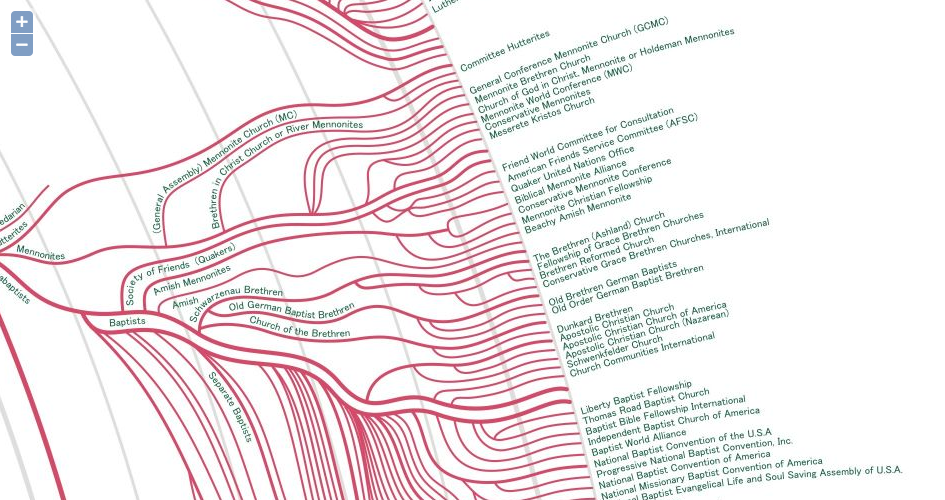
They are two noteworthy issues in this prayer of Jesus. First that he realizes that the lack of unity signals to the world that there are reasons to not believe and secondly that a prayer by none other than Jesus remains unfulfilled 20 centuries after they were allegedly spoken. ....“I ask not only on behalf of these, but also on behalf of those who will believe in me through their word, that they may all be one. As you, Father, are in me and I am in you, may they also be in us, so that the world may believe that you have sent me. The glory that you have given me I have given them, so that they may be one, as we are one, I in them and you in me, that they may become completely one, so that the world may know that you have sent me and have loved them even as you have loved me. Father, I desire that those also, whom you have given me, may be with me where I am, to see my glory, which you have given me because you loved me before the foundation of the world (John 17:20-24).
Man has erected barriers between themselves and God, such as liturgy, priests etc. What about the group of Christians who have noting but a few pages of the bible and gather together to read, pray and sing? Surely nothing could be closer to the earliest days of our church? So shouldn't worship and praise be that simple, a fellowship of believers coming together to share God's word and worship and pray together?Gxg (G²);65941395 said:In any case, in places where there are no liturgical songs available or even priests, that doesn't mean the Lord could not be present - it has happened throughout the Scriptures where the Lord has worked through means that seemed to be little. However, that's not to say that it was always meant to be as such - you can work in it. This is something my priest once said to me on the matter:
Orthodoxy is pre-denominational; therefore all other Christian confessions are incomplete and therefore cannot offer the full healing or therapeutic life that comes from being connected to the Church through the sacraments or channels of grace that Jesus provided. This is not being uncharitable. It is simply stating reality.
This is not a criticism or deriding other confessions anymore than stating a primitive field medical tent in the backcountry of Africa is less effective than a state of the art modern hospital here in the USA. Both serve a similar purpose but one is more effective in surgery, has better trained doctors and nurses, better equipment and methods. In short, Orthodoxy is this state of the art healing facility. Orthodoxy has a proven track record of producing healed people called saints.Gxg (G²);65187703 said:Many times Eastern Christians have been a minority/persecuted in Eastern religions, despite where they've also found ways to thrive in their practices AND represent Christ/His Work in the Church...

Gxg (G²);66170711 said:As it concerns dialogue, of course it can occur. St. Isaac of Syria lived in an era when there was still (though limited) intercommunion between the Churches. And we still value some of the teachings of people like Evagrius of Pontus who is not a Saint, and fell into error (Origen as well, actually) - as what is valuable is valuable. For good review, one can consider here in Sectarianism in Orthodoxy and Orthodoxy in Sectarianism - Eclectic Orthodoxy or the following:
Professor Richard Schneider on Orthodox Interchurch Dialogue (Critical Look at Challenges) - YouTube
Cool..Gxg (G²);66274840 said:To say "The Protestant Reformation is still going" is something that should be considered when realizing the context/background and make-up of what the Protestant Reformation was even about is something that really ended a long time ago - more shared on that in Major theological differences of Reformation & Evangelicalism? (as shared here or here in Protestant Reformation vs Primitive Restoration..alongside Orthodoxy and Anglicanism Ecumenical Dialogue and in Church/Seminaries & Exclusion of Minority: Why are Blacks/3rd World insights ignored?)
Orthodox did not have a Protestant Reformation that is said to have never ended (as much of the Reformation was explicitly anti-Papist and many of the doctrines, e.g. purgatory and indulgences, were not adopted in the East - even as there was some correspondence between German Reformers and the Patriarch that exists, as with much of that dialogue being lost to history and not remembered with how the East wasn't truly having the same battles as other Protestants were) - although it can be easily be said that there were reforms that did take place and changes that have occurred in differing ways when it comes to liturgy or other developments - and of course, in the 700s and 800s there was a Protestant-like movement in Byzantium called Iconoclasm that was eventually squelched (despite all the damage that occurred - and unfortunately, the Protestant Reformation later adopted Iconoclasm again ).


