
• Starting today August 7th, 2024, in order to post in the Married Couples, Courting Couples, or Singles forums, you will not be allowed to post if you have your Marital status designated as private. Announcements will be made in the respective forums as well but please note that if yours is currently listed as Private, you will need to submit a ticket in the Support Area to have yours changed.

  • CF has always been a site that welcomes people from different backgrounds and beliefs to participate in discussion and even debate. That is the nature of its ministry. In view of recent events emotions are running very high. We need to remind people of some basic principles in debating on this site. We need to be civil when we express differences in opinion. No personal attacks. Avoid you, your statements. Don't characterize an entire political party with comparisons to Fascism or Communism or other extreme movements that committed atrocities. CF is not the place for broad brush or blanket statements about groups and political parties. Put the broad brushes and blankets away when you come to CF, better yet, put them in the incinerator. Debate had no place for them. We need to remember that people that commit acts of violence represent themselves or a small extreme faction.
  • We hope the site problems here are now solved, however, if you still have any issues, please start a ticket in Contact Us

  • The rule regarding AI content has been updated. The rule now rules as follows:

    Be sure to credit AI when copying and pasting AI sources. Link to the site of the AI search, just like linking to an article.

Pete's Quite Thread post

mark kennedy

Natura non facit saltum
Site Supporter
Mar 16, 2004
22,030
7,265
62
Indianapolis, IN
✟594,630.00
Gender
Male
Faith
Calvinist
Marital Status
Single
Politics
US-Democrat
maha said:
Mark, I'd be interested in hearing what those nonrandom mechanisms of change are, but I fear they don't exist. Also, if they do exist, then how do you reconcile natural selection as the driving force behind evolution? You're kind of throwing the baby out with the bath water when you make such a claim.

Here are a couple:
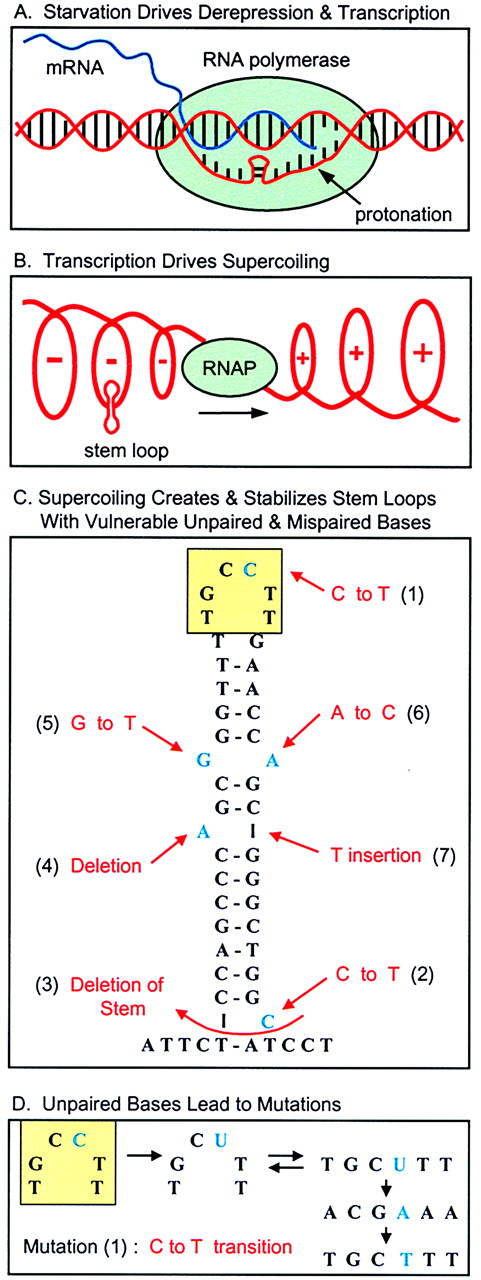
jb1100323001.jpeg


The evolutionists who I talk to me about mutations bring up the nylon bug. Basiclly what has happened is a gene has been altered in such a way as to make it possible for bacteria able to digest nylon. When looking at the papers on the subject there was one researcher that suggested that bacteria will swap out open reading frames. This is not unlike a machinist who swaps out a die in a punch press and it looks like a viable adaptative mechanism to me.

Bear in mind as a creationist I am trying to account for an awfull lot of change and it really stains the recombination of genes as the sole mechanism. A group of scientists, Jacob, Monod, Brenner and Cuzin, shared the nobel prize for thier paper on Lac-Operon. Their paper was originally consider not worth publishing so the started their on journal and founded molecular biology. Basiclly they had found a molecular machine that turns certain genes on and off. I'm still trying to sort through their work but it's really interesting stuff.

Another point which I don't understand is how these nonrandom mechanisms would alter the genome...without reproduction. Because you're saying that some sort of molecular change is happening among individuals which makes them more suitable for survival. That is definitely ID thinking, but it also supports the adaptive evolutionary theories which have been falsified in recent years. Organisms can't willfuly alter their own genetic make up in order to be better suited to survive in their environment...as far as I know.

I don't really thing the genome in general and the genes in particular are able to endure major changes. Natural selection is actually a minomer in that it does not sufficiently explain the process that preserves advantagous traits. There are dominant and recessive alleles which is a fancy word for the recombination of genes. We all get two copies of our parents DNA and the two copies are halfed taking certain genes from on parent and some from the other. The process of recombination would seem to be entirely random, the key is in how the genes are expressed.

Darwin noticed that finches who had certain traits in special circumstances would survive and the others would starve to death. The expression of these traits are random but how they are preserved depends on the environmental challenges they face. My basic point is that speciation (there are well over a dozen species of finches btw) does not alter the genes at all, nor does it need to. It's just a question of certain genes masking (called epistasis)the expression of others because they provide a selective advantage. Bottom line, mutations have nothing to do with this kind of adaptation.


I'm also now aware that you are a professed creationist which concerns me that you may just be drawing for straws...especially since the evidence that is required to prove your theories has not been produced (but I'm not saying it doesn't exist).

I don't know that I really have a theory here. What I have is a major problem with mutations being a vehicle for evolutionary change. In the rare cases where there is a slight beneficial effect from a genetic mutation it does not last very long. When you look at the effects of mutations of functional parts of the genome you will find a long list of diseases and disorders.
 
Upvote 0

maha

Active Member
Jun 17, 2005
171
11
✟351.00
Faith
Other Religion
Mark wrote:

I don't know that I really have a theory here. What I have is a major problem with mutations being a vehicle for evolutionary change. In the rare cases where there is a slight beneficial effect from a genetic mutation it does not last very long. When you look at the effects of mutations of functional parts of the genome you will find a long list of diseases and disorders.


One thing that you have to consider is that you are talking about mutation, natural selection, and evolution. This is something that takes thousands and thousands of years to observe and to make conclusions about. Scientists have only been studying it a couple hundred years. Granted, they have learned a lot, but they have not learned much in the way of "evolution in progress." It is hard to do, considering you need to study subsequent generations one after the next--this takes time...a lot of time.

I also think that you have an unclear perception of what "beneficial mutations" are. Every generation of organism has a mutation--for the simple fact that they are not identical to their parents (i.e. genetic drift). So if my parents have black hair, and for some reason I am born blonde, and it turns out that women find me more attractive than they do my brother who has dark hair, then the mutation which gave me blonde hair is a "beneficial mutation." My point being that when you generalize things and say that beneficial mutations are rare and short-lived, then you aren't fully considering the implications of your statement.
 
Upvote 0

Split Rock

Conflation of Blathers
Nov 3, 2003
17,607
730
North Dakota
✟22,466.00
Faith
Agnostic
Marital Status
Single
mark kennedy said:
"The most serious objection to the modern theory of evolution is that since mutations occur by `chance' and are undirected, it is difficult to see how mutation and selection can add up to the formation of such beautifully balanced organs as, for example, the human eye." Dobzhansky as quoted in 'A Biochemical Mechanism for Nonrandom Mutations and Evolution'

Natural selection and variation from recombination does not account for all of the changes that would have to occur down through natural history as it is described in TOE. I am looking around for nonrandom mechanisms of change and I have been pleasantly supprise by just how many of them are out there. Obviously, being a creationist I am pretty skeptical of modern evolutionary thinking but creationism needs evolutionary mechanisms to account for diversity.
.
A very interesting review article Mark. You did of course note that the paper deals with mechanisms that occur in microorganims and not in multicellular animals. I have a question for you. One of the theories mentioned in the paper is that the complex metabolic pathways all organims have today evolved in microorganims as they adapted to changing resources (eg. compound A is lacking, so the population starts making A from compund B, and then B becomes limiting, so B is then made from C, etc.). If this is the case, how do you explain the fact that we share most of these same pathways with microorganims if we were created separately? Again, Common Descent seems to be the answer.
 
Upvote 0

mark kennedy

Natura non facit saltum
Site Supporter
Mar 16, 2004
22,030
7,265
62
Indianapolis, IN
✟594,630.00
Gender
Male
Faith
Calvinist
Marital Status
Single
Politics
US-Democrat
Split Rock said:
A very interesting review article Mark. You did of course note that the paper deals with mechanisms that occur in microorganims and not in multicellular animals. I have a question for you. One of the theories mentioned in the paper is that the complex metabolic pathways all organims have today evolved in microorganims as they adapted to changing resources (eg. compound A is lacking, so the population starts making A from compund B, and then B becomes limiting, so B is then made from C, etc.). If this is the case, how do you explain the fact that we share most of these same pathways with microorganims if we were created separately? Again, Common Descent seems to be the answer.

It sounds to me like you are talking about cells with gene duplication capabilites. This is probably as empirical as natural selection gets, when faced with starvation some cells can make gene duplications. They can modify existing genes and due to the depression of genes the feedback controls (functional constraints) are relaxed. It is commonly misunderstood how important the enzymes are in this process, they are the key to the minor changes made to depressed genes.

"A multitude of random mechanisms result in hypermutation under conditions of environmental stress and clearly contribute to the variability essential to evolution. However, since most mutations are deleterious, random mechanisms that increase mutation rates also result in genomewide DNA damage. Among microorganisms, from phage to fungi, the overall mutation rate per genome is remarkably constant (within 2.5-fold), presumably reflecting an obligatory, delicate balance between the need for variation and the need to avoid general genetic damage... Thus, mutator strains are not selected in nature but remain at 1 to 2% of the population (35, 52); under certain adverse conditions, they flourish for short periods but are then selected against, apparently because of widespread deleterious effects intrinsic to genomewide hypermutation."

Notice that the selective advantage for a small minority only lasts a short time. It is essential to the survival of bacteria and other single celled organisms to be able to mutate in order to survive. The problem remains that mutations is the genetic damage they cause so mutated strands only have a slight advantage under adverse conditions.

You asked about the signifigance for common descent and the simularity of metabolic pathways. An increase in complexity could not be facilitated by the enhancement of a catabolic pathway or gene duplication on the scale required for the emergance of eukaryotes from bacteria and fauna. Novel genes would have to grow exponentially and while it is conceivable it just doesn't seem viable. The variations you can see in these instances don't progress A to B to C to D...ad infinitum. What they are, are variations to the left and right of the mean fittness of the overall population. At some point the dominant expression of the genes will return to A while retaining the mutant stands in a small minority of the population. Apparently, bacteria can swap out genes and duplicate some of them which can be slightly mutated without damaging the original gene that will continue to perform its function.

I'm still trying to figure out how this spans out when looking at the split between eastern and western gorillas, chimps and bonobos, old and new world monkeys...etc. There is no question that the genomes diverge as a result of this kind of speciation but I don't know that mutations play a signifigant role even though they may well be a consequence.
 
Upvote 0

mark kennedy

Natura non facit saltum
Site Supporter
Mar 16, 2004
22,030
7,265
62
Indianapolis, IN
✟594,630.00
Gender
Male
Faith
Calvinist
Marital Status
Single
Politics
US-Democrat
maha said:


One thing that you have to consider is that you are talking about mutation, natural selection, and evolution. This is something that takes thousands and thousands of years to observe and to make conclusions about. Scientists have only been studying it a couple hundred years. Granted, they have learned a lot, but they have not learned much in the way of "evolution in progress." It is hard to do, considering you need to study subsequent generations one after the next--this takes time...a lot of time.

That is why there is a great advantage to observing bacteria and fruit flies. You can observe changes over thousands of generations. In fact, I saw a study that covered thirty years of tracking bacteria strands and you do know that there are principles that apply to all living reproductive success right? What we have for the evolution of more complex systems is far less comprehensive but when they observe the mutations and their effects they find variations to the left and right of a mean (balance, fulcum, center) fittness.

I also think that you have an unclear perception of what "beneficial mutations" are. Every generation of organism has a mutation--for the simple fact that they are not identical to their parents (i.e. genetic drift). So if my parents have black hair, and for some reason I am born blonde, and it turns out that women find me more attractive than they do my brother who has dark hair, then the mutation which gave me blonde hair is a "beneficial mutation." My point being that when you generalize things and say that beneficial mutations are rare and short-lived, then you aren't fully considering the implications of your statement.

The differences in hair color are a prime example of how recombination explains diversity far better then these dangerous genetic mutations. Take for instance the artic white rabbit. These little guys are hopping further and further north as some point in history and they are getting various offspring with different colored fur. On rare occasions one will pop out white and this small minority of the population will fair better then the darker colored ones further north. This rare expression of the gene over time becomes more frequent and eventually most, if not all of the offspring are born white. Nothing got mutated in the genetic code, a recessive trait that was previously masked (epistasis) became dominant and began masking the expression of the other color variations.

What I have often wondered is if these populations began to migrate south again, how long would it take for there dominant white gene expression to revert back to a darker color. I suppose the question is purely academic but I would think it could happen within a few generations but I really don't have anything to go on.
 
Upvote 0

maha

Active Member
Jun 17, 2005
171
11
✟351.00
Faith
Other Religion
Mark wrote:

That is why there is a great advantage to observing bacteria and fruit flies. You can observe changes over thousands of generations.

Of course, the more generations we are able to study equates to shorter lifespans of the organisms, which typically means they are less "sophisticated" anatomically--i.e. bacteria and insects. The effects of natural selection aren't as significant on such organisms. So mutations don't necessarily function in the same capacity as they would in "higher vertebrates" for example. The environments in which bacteria thrive are so dynamic and brief, that selection only has a limited effect on them. They may mutate from one generation to the next before the benefits of the previous mutation becomes expressed. I had a point in there somewhere...

The differences in hair color are a prime example of how recombination explains diversity far better then these dangerous genetic mutations.

I may have to go back and read up on this again on my own. I'm unclear about the differentiation between recombination and mutation. A recombination could be deleterious or beneficial, just like a mutation could (assuming it is different). So from a selection standpoint, the benefits or drawbacks would be the same--the creature would either thrive or parish. Maybe you could shed some light on this for me and spare me the trip to Wikipedia.
 
Upvote 0

mark kennedy

Natura non facit saltum
Site Supporter
Mar 16, 2004
22,030
7,265
62
Indianapolis, IN
✟594,630.00
Gender
Male
Faith
Calvinist
Marital Status
Single
Politics
US-Democrat
maha said:
Of course, the more generations we are able to study equates to shorter lifespans of the organisms, which typically means they are less "sophisticated" anatomically--i.e. bacteria and insects. The effects of natural selection aren't as significant on such organisms. So mutations don't necessarily function in the same capacity as they would in "higher vertebrates" for example. The environments in which bacteria thrive are so dynamic and brief, that selection only has a limited effect on them. They may mutate from one generation to the next before the benefits of the previous mutation becomes expressed. I had a point in there somewhere...

I can see you are trying to get this into perspective and I think you are perfectly capable of working this out for yourself. You seem to have the basic idea but you need to realize that mutations have a very moderate effect and there is a strong tendancy to revert back to the original condition.


I may have to go back and read up on this again on my own. I'm unclear about the differentiation between recombination and mutation. A recombination could be deleterious or beneficial, just like a mutation could (assuming it is different). So from a selection standpoint, the benefits or drawbacks would be the same--the creature would either thrive or parish. Maybe you could shed some light on this for me and spare me the trip to Wikipedia.

Recombination is basic biology, the central dogma of biology and genetics is DNA. The DNA is transcribed (copied) into RNA, the RNA is translated into proteins. In order for there to be changes made to the DNA strands the enzymes have to be altered in such a way as to allow for mutations it become more common. The paper I linked to suggests that under certain circumstances the DNA becomes destabilized. The original genes will be preserved and continue to do what they did originally but there will be a new gene duplicated from the old one. This duplicated gene can be changed but the chances of it becoming the dominant allele (recombination) is pretty slim.

If you are interested I did a couple of posts for the quiet thread that goes into some of the particulars of this process:

"The striking regularity with which the same hybrid forms always reappeared whenever fertilization took place between the same species induced further experiments to be undertaken” (Mendel)


Mendel's experiments yielded two laws of science that became the foundation of modern genetics. Without directly observing the chromosomes he built a scientific model that demonstrated how the internal mechanism of inherited traits worked. Nearly half a century later his only surviving paper on the pea plant experiments were discovered and demonstrated again and again in the early 1900s. Mendel noted that one trait masks the other; the one that masks the other is dominant the masked trait is recessive (aka epistasis). It was believed that inheritance was a mixture of characteristics that blended to produce unique internal traits. We know now that the genes, Mendel called the 'elementen', recombine through a process of recombination called Meiosis

Mendel clearly states based on his experiments that the demonstrated mechanisms that are the bedrock of modern genetics had defining boundaries. These boundaries are the elementum (genes) that are separated from each other as gametes form. The gametes join at fertilization and would recombine at random. The traits are expressed in different ways because a gene can exist in alternative forms, or alleles. In summarizing after producing 70 hybrid crosses with each of the seven traits he studied, from 10,000 meticulous experiments, crossing and cataloging some 24,034 plants, over a six year period (1857-1863), Mendel writes:

“Gärtner, by the results of these transformation experiments, was led to oppose the opinion of those naturalists who dispute the stability of plant species and believe in a continuous evolution of vegetation. He perceives in the complete transformation of one species into another an indubitable proof that species are fixed with limits beyond which they cannot change.”

http://www.christianforums.com/t1155768-the-quiet-thread.html&page=2

It has been my contention that Mendel's laws of inheritance are in conflict with Darwinian natural selection. Do your own thinking on this and take your time working out the technical details. This is a casual conversation but if you do it right you can get a look into a fascinating area of study, how life actually works.
 
Upvote 0

Tomk80

Titleless
Apr 27, 2004
11,570
429
45
Maastricht
Visit site
✟36,582.00
Faith
Agnostic
maha said:
Of course, the more generations we are able to study equates to shorter lifespans of the organisms, which typically means they are less "sophisticated" anatomically--i.e. bacteria and insects. The effects of natural selection aren't as significant on such organisms. So mutations don't necessarily function in the same capacity as they would in "higher vertebrates" for example. The environments in which bacteria thrive are so dynamic and brief, that selection only has a limited effect on them. They may mutate from one generation to the next before the benefits of the previous mutation becomes expressed. I had a point in there somewhere...
Actually, the effects of natural selection on these animals becomes more profound, as there is more variation possible to select from.

I may have to go back and read up on this again on my own. I'm unclear about the differentiation between recombination and mutation. A recombination could be deleterious or beneficial, just like a mutation could (assuming it is different). So from a selection standpoint, the benefits or drawbacks would be the same--the creature would either thrive or parish. Maybe you could shed some light on this for me and spare me the trip to Wikipedia.
A recombination is an exchange of alleles between different chromosomes through crossing over. Interesting question then becomes, where do the alleles come from?
 
Upvote 0

gluadys

Legend
Mar 2, 2004
12,958
682
Toronto
✟39,020.00
Faith
Protestant
Politics
CA-NDP
mark kennedy said:
Natural selection is actually a minomer in that it does not sufficiently explain the process that preserves advantagous traits.

Could you explain where natural selection falls short?

There are dominant and recessive alleles which is a fancy word for the recombination of genes.

This is incorrect. There are dominant and recessive alleles, and there is recombination of genes, but these are not the same thing. Perhaps you mean that recombination affects the distribution of dominant and recessive alleles?

Are you using "recombination" as a synonym for "independent assortment"? Because it is not.

My basic point is that speciation (there are well over a dozen species of finches btw) does not alter the genes at all, nor does it need to. It's just a question of certain genes masking (called epistasis)the expression of others because they provide a selective advantage. Bottom line, mutations have nothing to do with this kind of adaptation.

You are right. Mutations only open up possibilities of adaptation. It takes natural selection to implement adaptation. That is why it is natural selection, not mutations, that drives evolution.

In the rare cases where there is a slight beneficial effect from a genetic mutation it does not last very long.

What is your basis for saying this?

When you look at the effects of mutations of functional parts of the genome you will find a long list of diseases and disorders.

But what is their evolutionary effect?
I cannot figure out why you think diseases and disorders have a major evolutionary impact while you deny that beneficial changes do.
 
Upvote 0

gluadys

Legend
Mar 2, 2004
12,958
682
Toronto
✟39,020.00
Faith
Protestant
Politics
CA-NDP
mark kennedy said:
"A multitude of random mechanisms result in hypermutation under conditions of environmental stress and clearly contribute to the variability essential to evolution. However, since most mutations are deleterious, random mechanisms that increase mutation rates also result in genomewide DNA damage. Among microorganisms, from phage to fungi, the overall mutation rate per genome is remarkably constant (within 2.5-fold), presumably reflecting an obligatory, delicate balance between the need for variation and the need to avoid general genetic damage... Thus, mutator strains are not selected in nature but remain at 1 to 2% of the population (35, 52); under certain adverse conditions, they flourish for short periods but are then selected against, apparently because of widespread deleterious effects intrinsic to genomewide hypermutation."

Notice that the selective advantage for a small minority only lasts a short time. It is essential to the survival of bacteria and other single celled organisms to be able to mutate in order to survive. The problem remains that mutations is the genetic damage they cause so mutated strands only have a slight advantage under adverse conditions.

Note that it is the mutator genes which are temporarily selected for in conditions of stress, but then selected against when the level of stress is lowered.

But what about novel mutations which turned up while the mutator genes were speeding up the mutation rate? Any of those that benifited the organisms in which they occurred could have been driven to fixation and become a permanent part of the species genome. The selective advantage of the adaptive mutations is not the same as the selective advantage of the mutator genes. The selective advantage of mutator genes only lasts as long as the condition of stress lasts. But the selective advantage of any beneficial mutations that occur as a result can be permanent.


What they are, are variations to the left and right of the mean fittness of the overall population. At some point the dominant expression of the genes will return to A while retaining the mutant stands in a small minority of the population.

What you are overlooking is that the mean fitness of the population can change.
 
Upvote 0

gluadys

Legend
Mar 2, 2004
12,958
682
Toronto
✟39,020.00
Faith
Protestant
Politics
CA-NDP
mark kennedy said:
What I have often wondered is if these populations began to migrate south again, how long would it take for there dominant white gene expression to revert back to a darker color. I suppose the question is purely academic but I would think it could happen within a few generations but I really don't have anything to go on.

You may not need to wait for them to move south since climate change is creating shorter winters as it is. Also IIRC Arctic hares change colour seasonally and are only white when the landscape is snow-covered, so all they really need to do is change the timing of their colour change.
 
Upvote 0

gluadys

Legend
Mar 2, 2004
12,958
682
Toronto
✟39,020.00
Faith
Protestant
Politics
CA-NDP
maha said:
I may have to go back and read up on this again on my own. I'm unclear about the differentiation between recombination and mutation. A recombination could be deleterious or beneficial, just like a mutation could (assuming it is different). So from a selection standpoint, the benefits or drawbacks would be the same--the creature would either thrive or parish. Maybe you could shed some light on this for me and spare me the trip to Wikipedia.

I think mark is also conflating recombination with independent assortment and that only adds to the confusion.

A mutation is a change in the actual DNA sequence.

Both independent assortment and recombination are features of meiosis, the special type of cell division needed to reduce the double number of chromosomes in ordinary cells to the single number of chromosomes in an egg or sperm cell. Fertilization restores the double number in the zygote.

Independent assortment was discovered by Mendel. It refers to the fact that although we each get half of our genes from each parent, we do not get one-quarter of our genes from each grandparent. This is because as our parents produce gametes, the chromosomes they inherited from their parents are distributed randomly. So a gamete may get mostly the chromosomes your parent inherited from your grandfather or mostly the chromosomes inherited from your grandmother. Even when two gametes contain roughly the same proportion of paternal and maternal gametes, they will be sorted differently. In fact, the random assortment of paternal and maternal chromosomes in humans produces 2^23 (8,388,608) different combinations of chromosomes.

Then consider that fertilization allows this number to be squared!!!!!


And as if that did not allow for sufficient variety, you also have recombination or crossing over of chromosomes as well. Crossing over refers to one leg of a chromosome crossing over with the leg of a homologous chromosome during meiosis and swapping parts of the chromosome.


Like this

This means that some of the chromosomes that end up in gametes are partly paternal and partly maternal. As j kimball observes:

Furthermore, because of crossing over, none of these chromosomes is "pure" maternal or paternal. So I think it is safe to conclude that of all the billions of sperm produced by a man during his lifetime (and the hundreds of eggs that mature over the life of a woman), no two have exactly the same gene content.​

http://users.rcn.com/jkimball.ma.ultranet/BiologyPages/M/M.html

If a mutation occurs in this process (and mutations do occur in every reproduction) there is more variation still.
 
Upvote 0

gluadys

Legend
Mar 2, 2004
12,958
682
Toronto
✟39,020.00
Faith
Protestant
Politics
CA-NDP
mark kennedy said:
In order for there to be changes made to the DNA strands the enzymes have to be altered in such a way as to allow for mutations it become more common.

Strictly speaking, this is not true. Mutations occur whenever a strand of DNA is copied. In bacteria, at least, conditions of stress activate mutator genes which speed up the mutation rate. But mutations also occur at a slower rate in normal conditions and changes to the enzymes are not required.

The paper I linked to suggests that under certain circumstances the DNA becomes destabilized. The original genes will be preserved and continue to do what they did originally but there will be a new gene duplicated from the old one. This duplicated gene can be changed but the chances of it becoming the dominant allele (recombination) is pretty slim.

This makes no difference to evolution if conditions favour the selection of the recessive allele.


"The striking regularity with which the same hybrid forms always reappeared whenever fertilization took place between the same species induced further experiments to be undertaken” (Mendel)

But hybrids play a very limited role in evolution. Most speciation occurs without hybridization.
 
Upvote 0

maha

Active Member
Jun 17, 2005
171
11
✟351.00
Faith
Other Religion
“Gärtner, by the results of these transformation experiments, was led to oppose the opinion of those naturalists who dispute the stability of plant species and believe in a continuous evolution of vegetation. He perceives in the complete transformation of one species into another an indubitable proof that species are fixed with limits beyond which they cannot change.”

This opens up a whole new set of questions--about speciation particularly. I think I've already exceeded the scope of my knowledge on the subject, but it does lead me to wonder how species evolve from other species then. I guess that a certain population would have to be isolated from another so there genes could not intermingle, then once one populations gene pool varied enough from the other population's, then interbreeding would be impossible should they attempt intermingling again. Of course, there are other considerations which might cause them to be "isolated"--perhaps those relating to competition and not just geographic isolation as a result of migration or something. I don't know, it's pretty confusing. I guess I should focus on one issue at a time. But at this point, I'm lost on the other issue as well.:scratch:
 
Upvote 0

Pete Harcoff

PeteAce - In memory of WinAce
Jun 30, 2002
8,304
72
✟9,884.00
Faith
Other Religion
maha said:
This opens up a whole new set of questions--about speciation particularly. I think I've already exceeded the scope of my knowledge on the subject, but it does lead me to wonder how species evolve from other species then. I guess that a certain population would have to be isolated from another so there genes could not intermingle, then once one populations gene pool varied enough from the other population's, then interbreeding would be impossible should they attempt intermingling again. Of course, there are other considerations which might cause them to be "isolated"--perhaps those relating to competition and not just geographic isolation as a result of migration or something. I don't know, it's pretty confusing. I guess I should focus on one issue at a time. But at this point, I'm lost on the other issue as well.:scratch:

If you can, check out What Evolution Is by Ernst Mayr. It's got a good chapter on various types of speciation.
 
Upvote 0

gluadys

Legend
Mar 2, 2004
12,958
682
Toronto
✟39,020.00
Faith
Protestant
Politics
CA-NDP
maha said:
This opens up a whole new set of questions--about speciation particularly. I think I've already exceeded the scope of my knowledge on the subject, but it does lead me to wonder how species evolve from other species then. I guess that a certain population would have to be isolated from another so there genes could not intermingle, then once one populations gene pool varied enough from the other population's, then interbreeding would be impossible should they attempt intermingling again.

Basically, you've nailed it. In 1980 a team of biologists reported doing this experimentally with a population of fruit flies. They divided the population into several groups giving each a different "ecology", while keeping one as a control group.

Five years later they had different species of fruit flies. In two cases they had changed the diet of the flies. So one of the new species ate meat instead of fruit. Genetic analysis showed it was 3% different in coding DNA sequences from the parent population. Humans and chimpanzees show only 2% difference.

G Kilias, SN Alahiotis, and M Pelecanos. A multifactorial genetic investigation of speciation theory using drosophila melanogaster Evolution 34:730-737, 1980

Of course, this is not the only way to get new species. So I'd follow Pete's advice too and read up in more detail on various pathways to speciation.
 
Upvote 0

maha

Active Member
Jun 17, 2005
171
11
✟351.00
Faith
Other Religion
Basically, you've nailed it. In 1980 a team of biologists reported doing this experimentally with a population of fruit flies. They divided the population into several groups giving each a different "ecology", while keeping one as a control group.

Five years later they had different species of fruit flies. In two cases they had changed the diet of the flies. So one of the new species ate meat instead of fruit. Genetic analysis showed it was 3% different in coding DNA sequences from the parent population. Humans and chimpanzees show only 2% difference.

That's quite compelling, I can't beleive I'm actually on the right track! Like I said though, I'm sure there are other factors which allow for speciation to occur. Since it usually happens over a long time frame, we may never know all of the things that are involved in the process. But it is very interesting nonetheless.
 
Upvote 0

mark kennedy

Natura non facit saltum
Site Supporter
Mar 16, 2004
22,030
7,265
62
Indianapolis, IN
✟594,630.00
Gender
Male
Faith
Calvinist
Marital Status
Single
Politics
US-Democrat
maha said:
This opens up a whole new set of questions--about speciation particularly. I think I've already exceeded the scope of my knowledge on the subject, but it does lead me to wonder how species evolve from other species then. I guess that a certain population would have to be isolated from another so there genes could not intermingle, then once one populations gene pool varied enough from the other population's, then interbreeding would be impossible should they attempt intermingling again. Of course, there are other considerations which might cause them to be "isolated"--perhaps those relating to competition and not just geographic isolation as a result of migration or something. I don't know, it's pretty confusing. I guess I should focus on one issue at a time. But at this point, I'm lost on the other issue as well.:scratch:

I know the feeling, assuming you haven't allready seen this I thought I would link you to a comprehensive discussion on the topic of speciation:

Speciation

This subject is absolutly incomprehensible unless you are willing to look at specific instances of speciation. It is a fascinating subject, for instance, the Kolas as you go from northern to southern Australia have speciated straight down the line. Why? The only viable answer would have to be geographic isolation. When introduced to new enviroments populations will tend to speciate depending on certain variables. Be patient with yourself, this actually becomes a lot easier when you start looking at the special instances where this happens.

There are other things like genetic drift that have to be taken into consideration but I think geologic isolation is the most common way speciation occurs. Take for instance the eastern and western gorillas in Africa. They are seperated by a great river (the Congo river if memory serves) and they have become distintly different species. The chimpanzee and the bonobo (a pygmy chimp that lives in South American rainforest) are so closely related they can still interbreed even though they are seperated by a lot of miles.

One more thing and I hope this won't confuse the issue for you. Humans, no matter how much genetic drift or geologic isolation do not speciate. I don't know how this compares to other mammals but that is compelling proof for me that the human species is immutable.
 
Upvote 0

Pete Harcoff

PeteAce - In memory of WinAce
Jun 30, 2002
8,304
72
✟9,884.00
Faith
Other Religion
mark kennedy said:
One more thing and I hope this won't confuse the issue for you. Humans, no matter how much genetic drift or geologic isolation do not speciate. I don't know how this compares to other mammals but that is compelling proof for me that the human species is immutable.

Yeah, but what's the longest the humans have been truly isolated? A couple thousand generations maybe?

Compare that to the Eastern and Western gorillas or chimps and bonobos which are thought to have diverged millions of years ago.

It's premature to conclude we can't speciate simply because we haven't speciated.
 
Upvote 0

maha

Active Member
Jun 17, 2005
171
11
✟351.00
Faith
Other Religion
One more thing and I hope this won't confuse the issue for you. Humans, no matter how much genetic drift or geologic isolation do not speciate. I don't know how this compares to other mammals but that is compelling proof for me that the human species is immutable.

It's premature to conclude we can't speciate simply because we haven't speciated.

I agree with Pete on that point. When we evolved into homo, the overall population was relatively small and sparse. And from our austrolopithicene roots, we have continually migrated outward--away from Africa. So populations were usually isolated from other populations--because of their nomadic tendencies. I think this may have alowed for the division (speciation) of neanderthal and cro-magnon to occur. But once we became homo sapiens sapiens, there were so many of us, that our populations began to overlap and intermingle. At this point, speciation became impossible. The only changes that we see among homo sapiens is the division of different races. This was of course a function of geography too, but it wasn't enough to allow for total speciation to occur. I'm kind of winging it, admittidly, but that is my perception of how it works anyway. I could be wrong though.
 
Upvote 0