
• Starting today August 7th, 2024, in order to post in the Married Couples, Courting Couples, or Singles forums, you will not be allowed to post if you have your Marital status designated as private. Announcements will be made in the respective forums as well but please note that if yours is currently listed as Private, you will need to submit a ticket in the Support Area to have yours changed.

  • CF has always been a site that welcomes people from different backgrounds and beliefs to participate in discussion and even debate. That is the nature of its ministry. In view of recent events emotions are running very high. We need to remind people of some basic principles in debating on this site. We need to be civil when we express differences in opinion. No personal attacks. Avoid you, your statements. Don't characterize an entire political party with comparisons to Fascism or Communism or other extreme movements that committed atrocities. CF is not the place for broad brush or blanket statements about groups and political parties. Put the broad brushes and blankets away when you come to CF, better yet, put them in the incinerator. Debate had no place for them. We need to remember that people that commit acts of violence represent themselves or a small extreme faction.
  • We hope the site problems here are now solved, however, if you still have any issues, please start a ticket in Contact Us

LED light problem

jayem

Naturalist
Jun 24, 2003
15,429
7,166
74
St. Louis, MO.
✟426,066.00
Country
United States
Gender
Male
Faith
Atheist
Marital Status
Married
This is weird. We have a built-in banquette in the kitchen with 2 pendant light fixtures over the table. I've been using 60W, G16½ bulbs. Which is a small, globe-shaped bulb with a medium base. See photo. Standard sized bulbs are too long--they extend below the shades and produce glare. We leave the lights on at least 12-16hrs/day, and I wanted to install LEDs that I wouldn't have to change for a long time. I found LED bulbs in exactly that style, with an equivalent light output. But when I installed them, the bulbs emitted a low level of light even when the wall switch was off. And when I turned the switch on, the bulbs glowed at normal output for a second or two, and then went off completely. Both bulbs behaved the same way. The lights are on a dimmer switch, but the bulbs I used are rated as dimmable. Thinking the problem might be the switch, I screwed in a 100W equivalent, standard shape LED bulb that I use in my nightstand lamp. This worked perfectly. For some reason, these small LED bulbs act crazy, while larger LEDs work fine.

I'll mention that these pendants date from the 90s. They're contemporary in style, and made for the US market by a European manufacturer. They're very sleek and cool. I want to keep them. I'm thinking the fixtures just don't work with these particular bulbs. Any ideas? Should I replace the wall switch? 60W CFLs are all too big and stick out below the bottom of the shades. Should I try G16½ LEDs from a different manufacturer? Or just live with replacing the bulbs regularly?
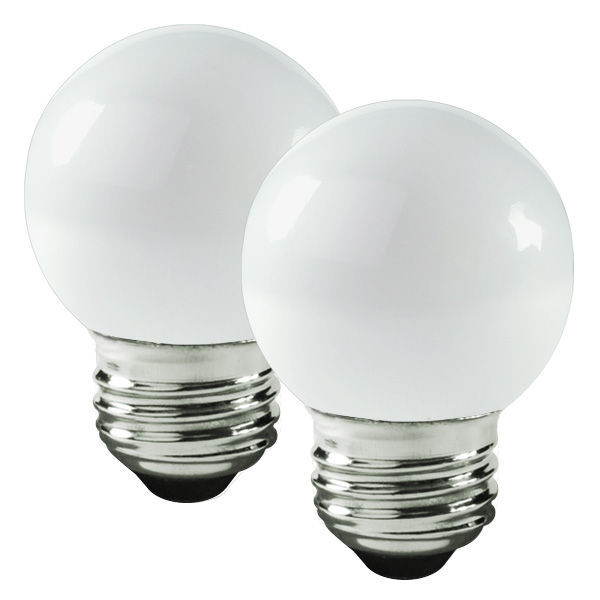
54181_6572575419302333d7dd2082987fc3363393afb5_original.jpg
 

NothingIsImpossible

Well-Known Member
May 22, 2015
5,618
3,253
✟289,942.00
Gender
Male
Faith
Christian
Marital Status
Married
As a tech geek I find LED bulbs confusing. There are all kinds like the ones above, then twisted ones, then weird cone ones. And despite some saying the same wattage, some appear darker, some brighter...etc. Then they have words like "Indoor brightness" or "Natural color". Its so very confusing. I just buy a bulb and if it is white I keep it, if yellowish or to dark I return it.
 
Upvote 0

chevyontheriver

Well-Known Member
Site Supporter
Sep 29, 2015
23,379
20,298
Flyoverland
✟1,436,154.00
Country
United States
Gender
Male
Faith
Catholic
Marital Status
Married
Politics
US-American-Solidarity
This is weird. We have a built-in banquette in the kitchen with 2 pendant light fixtures over the table. I've been using 60W, G16½ bulbs. Which is a small, globe-shaped bulb with a medium base. See photo. Standard sized bulbs are too long--they extend below the shades and produce glare. We leave the lights on at least 12-16hrs/day, and I wanted to install LEDs that I wouldn't have to change for a long time. I found LED bulbs in exactly that style, with an equivalent light output. But when I installed them, the bulbs emitted a low level of light even when the wall switch was off. And when I turned the switch on, the bulbs glowed at normal output for a second or two, and then went off completely. Both bulbs behaved the same way. The lights are on a dimmer switch, but the bulbs I used are rated as dimmable. Thinking the problem might be the switch, I screwed in a 100W equivalent, standard shape LED bulb that I use in my nightstand lamp. This worked perfectly. For some reason, these small LED bulbs act crazy, while larger LEDs work fine.

I'll mention that these pendants date from the 90s. They're contemporary in style, and made for the US market by a European manufacturer. They're very sleek and cool. I want to keep them. I'm thinking the fixtures just don't work with these particular bulbs. Any ideas? Should I replace the wall switch? 60W CFLs are all too big and stick out below the bottom of the shades. Should I try G16½ LEDs from a different manufacturer? Or just live with replacing the bulbs regularly?

54181_6572575419302333d7dd2082987fc3363393afb5_original.jpg
Do these new bulbs work just fine in other fixtures? If not, it's goofy bulbs that should be returned. If so, you have an oddity worthy of an electrician's attention.
 
Upvote 0

Dave-W

Welcoming grandchild #7, Arturus Waggoner!
Site Supporter
Jun 18, 2014
30,522
16,853
Maryland - just north of D.C.
Visit site
✟772,070.00
Country
United States
Gender
Male
Faith
Messianic
Marital Status
Married
Politics
US-Others
I would think the problem lies in the dimmer switches. Most LEDs do not work well with dimmers, and those that do usually need a specific type of dimmer. (not just a rheostat)

As Chevy said, try them in other fixtures WITHOUT dimmers and see how well they work there.
 
  • Agree
Reactions: RDKirk
Upvote 0

Dave-W

Welcoming grandchild #7, Arturus Waggoner!
Site Supporter
Jun 18, 2014
30,522
16,853
Maryland - just north of D.C.
Visit site
✟772,070.00
Country
United States
Gender
Male
Faith
Messianic
Marital Status
Married
Politics
US-Others
And despite some saying the same wattage, some appear darker, some brighter...etc. Then they have words like "Indoor brightness" or "Natural color".
LEDs usually will say what the actual Lumen output is (so you have a better comparison with incandescents) and a "temperature." 2500°K is a yellowish color similar to incandescents. A higher number (5000°K) will be a more pure white.
 
Upvote 0

RDKirk

Alien, Pilgrim, and Sojourner
Site Supporter
Mar 3, 2013
43,165
23,940
US
✟1,829,039.00
Faith
Christian
Marital Status
Married
Dave-W is correct that some LEDs require modern technically advanced dimmers (old school rheostats need not apply).

However, "off" should still be off.

I'm wondering if that circuit was properly switched with the switch on the hot leg rather than the neutral leg. The switch can be on either leg and a regular incandescent will shut off, but if it's on the neutral leg, there will still be power to the socket (which is considered a bad thing in electrician circles). That can be checked with a circuit tester at a socket when it's switched off.

Or those dimmers are not properly shutting the current completely off at their lowest position. They may get close enough to zero current flow that an incandescent filament doesn't glow, but LEDs are far more active at lower current levels...which is why they operate with such low wattage.

Again, test those sockets for current when they are supposedly "off."
 
Upvote 0

Dave-W

Welcoming grandchild #7, Arturus Waggoner!
Site Supporter
Jun 18, 2014
30,522
16,853
Maryland - just north of D.C.
Visit site
✟772,070.00
Country
United States
Gender
Male
Faith
Messianic
Marital Status
Married
Politics
US-Others
I'm wondering if that circuit was properly switched with the switch on the hot leg rather than the neutral leg.
Yeah - the same thought crossed my mind.
Again, test those sockets for current when they are supposedly "off."
Agreed. Old school rheostat dimmers often just took the current down to a small trickle. But that will still light up LEDs.
 
Upvote 0

chevyontheriver

Well-Known Member
Site Supporter
Sep 29, 2015
23,379
20,298
Flyoverland
✟1,436,154.00
Country
United States
Gender
Male
Faith
Catholic
Marital Status
Married
Politics
US-American-Solidarity
Yeah - the same thought crossed my mind.

Agreed. Old school rheostat dimmers often just took the current down to a small trickle. But that will still light up LEDs.
I think it's most likely that the dimmer is the problem. Old school dimmer maybe, or just worn out. Might be a do-it-yourself or it might require an electrician. Don't get zapped over this.
 
  • Agree
Reactions: Dave-W
Upvote 0

jayem

Naturalist
Jun 24, 2003
15,429
7,166
74
St. Louis, MO.
✟426,066.00
Country
United States
Gender
Male
Faith
Atheist
Marital Status
Married
I did exchange the LEDs for regular incandescent bulbs. (I could buy 8 regular bulbs for what 2 LEDs cost.) But I found some small print instructions on the LED's packaging that I hadn't noticed before. It stated that the bulbs should only be used in upright or horizontal installations. There was even a small image of the bulb base-up with a diagonal line through it. And in my pendant fixtures, the bulb is base-up. Why would a bulb not be suitable if it's used upside down? But I kinda doubt this was the problem. I tested a 100W, standard shape LED in the same fixture and it worked fine in an upside down orientation. It's just strange.
 
Upvote 0

chevyontheriver

Well-Known Member
Site Supporter
Sep 29, 2015
23,379
20,298
Flyoverland
✟1,436,154.00
Country
United States
Gender
Male
Faith
Catholic
Marital Status
Married
Politics
US-American-Solidarity
I did exchange the LEDs for regular incandescent bulbs. (I could buy 8 regular bulbs for what 2 LEDs cost.) But I found some small print instructions on the LED's packaging that I hadn't noticed before. It stated that the bulbs should only be used in upright or horizontal installations. There was even a small image of the bulb base-up with a diagonal line through it. And in my pendant fixtures, the bulb is base-up. Why would a bulb not be suitable if it's used upside down?
I would get it if an incandescent bulb, which generates a LOT of heat, might only fit some orientations in a fixture. The LED should be very low heat, so I'm surprised it matters. Don't know what to say. But if you have LEDs now that work, you're probably happy but you might want to return those original LEDs.
 
Upvote 0

RDKirk

Alien, Pilgrim, and Sojourner
Site Supporter
Mar 3, 2013
43,165
23,940
US
✟1,829,039.00
Faith
Christian
Marital Status
Married
I did exchange the LEDs for regular incandescent bulbs. (I could buy 8 regular bulbs for what 2 LEDs cost.) But I found some small print instructions on the LED's packaging that I hadn't noticed before. It stated that the bulbs should only be used in upright or horizontal installations. There was even a small image of the bulb base-up with a diagonal line through it. And in my pendant fixtures, the bulb is base-up. Why would a bulb not be suitable if it's used upside down? But I kinda doubt this was the problem. I tested a 100W, standard shape LED in the same fixture and it worked fine in an upside down orientation. It's just strange.

It is because of heat. The LED base circuitry does generate internal heat, especially as they go up in wattage. I've got some 100 and 200 real wattage high intensity LED video lights that need desktop-computer type active cooling systems.

With smaller lights, the light position can be critical in making sure air heated by the circuitry goes in the right direction away from the light. The penalty will probably be a shorter lifespan.
 
  • Informative
Reactions: jayem
Upvote 0

prodromos

Senior Veteran
Site Supporter
Nov 28, 2003
24,861
16,232
60
Sydney, Straya
✟1,569,102.00
Country
Australia
Gender
Male
Faith
Eastern Orthodox
Marital Status
Married
Do you have 2 way switching on the circuit? If you do then it is likely that the neutral is being switched instead of the active. Alternatively, your switch might be faulty and isn't turning off completely but going to high resistance instead.
There are a few different types of dimmers, and dimmable globes need to be matched to the appropriate dimmer.

Leading edge dimmers (or triac dimmers) work by chopping the leading edge of the sine wave after it passed through zero. They work well with the old incandescant globes but also tend to need a minimum load, which LED globes usually don't provide.

Trailing edge dimmers work by chopping the tail of the sine wave before it passes through zero. They work well with low loads and are usually necessary for dimmable LED globes.
 
Upvote 0