

- Feb 5, 2002
- 187,883
- 68,895
- Country
- United States
- Gender
- Female
- Faith
- Catholic
- Marital Status
- Married
- Politics
- US-Others
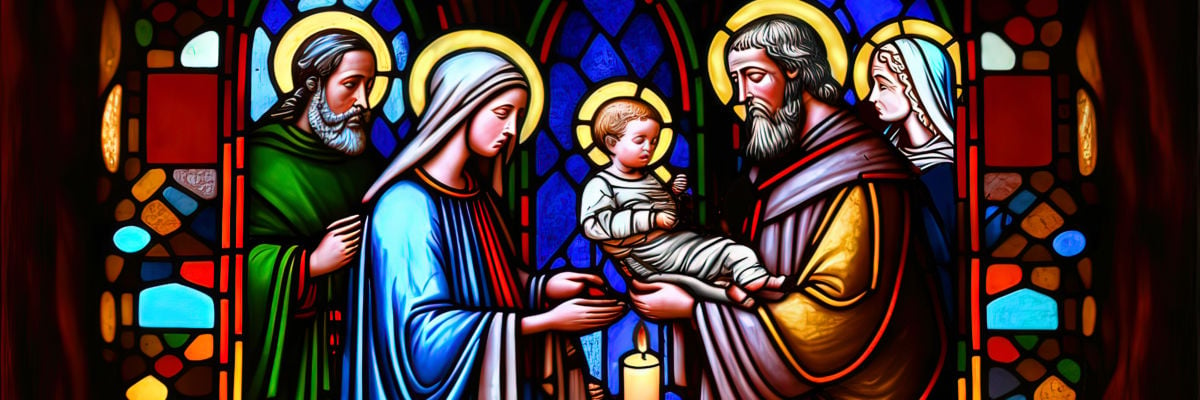
Under the Law of Moses, forty days after the birth of a son, a woman would offer a “sin offering” in the Temple (Lev. 12:1-4). And so today, forty days after Christmas, we celebrate the Feast of the Presentation. Since this is the final Christmas-related feast, it’s also when people began looking for signs of spring, a practice that gave rise to Groundhog Day.
What exactly is going on today? And why is it so important? We’ll start by explaining the deeply Jewish background of the Feast of the Presentation, because without that, it’s hard to make sense of any of it.
For instance, there’s an ongoing debateabout whether the Holy Family was “middle class” or poor. Leaving aside the anachronistic nature of using “middle class” to describe anyone in the first century, the question is largely answered by Luke 2:24, which says that Mary’s offering in the Temple was “a pair of turtledoves, or two young pigeons.” What’s the significance of that? Ordinarily, a woman offered “a lamb a year old for a burnt offering, and a young pigeon or a turtledove for a sin offering” (Lev. 12:6). But “if she cannot afford a lamb, then she shall take two turtledoves or two young pigeons, one for a burnt offering and the other for a sin offering” (v. 8). In this case, the fact that Mary is offering two birds tells us that the Holy Family were poor enough that they couldn’t afford a lamb.
But we’ve just established that she’s offering a “sin offering” here in the Temple. Doesn’t that prove that Mary is a sinner, just like the rest of us? That’s how many Protestants read the passage. John MacArthur writes, “That Mary offered a sin offering is consistent with the reality that she was a sinner in need of a Savior. The Catholic dogma that Mary was immaculately conceived and lived a sinless life finds no support in Scripture.” And CARM’s Matt Slick asks, “If Mary was sinless, how could she also be unclean?”
So according to MacArthur and Slick, the Feast of the Presentation is all about Mary offering a sin offering to atone for the “sin” of . . . well, what, exactly? Giving birth to Jesus Christ? The obsession with trying to debunk the Catholic view of Mary has led these men into strange and impious places.
As you might have guessed, these Protestant objections are ignorant of the Jewish background to Luke 2. Let’s start with Slick’s question: “if Mary was sinless, how could she also be unclean?” Quite easily. Ritual impurity isn’t the same thing as being in a state of sin. As Jonathan Klawans explains in his book Impurity and Sin in Ancient Judaism, “sin does not produce ritual impurity, and ritual impurity does not render one sinful. Also ritual purification is not a part of the process of atonement.” Klawans further explains that ritual impurity is “generally natural and more or less unavoidable,” and “it is not sinful to contract these impurities.”
We see this distinction illustrated quite clearly in the parable of the Good Samaritan (Luke 10:25-37), in which the priest and Levite see a man on the road, wounded so badly that he appeared to be dead, and “passed by on the other side.” Why did they pass by? Because touching a dead body would render one ritually impure (Num. 19:13). By obsessing about ritual impurity, they were failing to treat the man with charity. Jesus is clear that the Samaritan, unconcerned with such matters, is the only one who treats the man lovingly.
Continued below.
 www.catholic.com
What exactly is going on today? And why is it so important? We’ll start by explaining the deeply Jewish background of the Feast of the Presentation, because without that, it’s hard to make sense of any of it.
For instance, there’s an ongoing debateabout whether the Holy Family was “middle class” or poor. Leaving aside the anachronistic nature of using “middle class” to describe anyone in the first century, the question is largely answered by Luke 2:24, which says that Mary’s offering in the Temple was “a pair of turtledoves, or two young pigeons.” What’s the significance of that? Ordinarily, a woman offered “a lamb a year old for a burnt offering, and a young pigeon or a turtledove for a sin offering” (Lev. 12:6). But “if she cannot afford a lamb, then she shall take two turtledoves or two young pigeons, one for a burnt offering and the other for a sin offering” (v. 8). In this case, the fact that Mary is offering two birds tells us that the Holy Family were poor enough that they couldn’t afford a lamb.
But we’ve just established that she’s offering a “sin offering” here in the Temple. Doesn’t that prove that Mary is a sinner, just like the rest of us? That’s how many Protestants read the passage. John MacArthur writes, “That Mary offered a sin offering is consistent with the reality that she was a sinner in need of a Savior. The Catholic dogma that Mary was immaculately conceived and lived a sinless life finds no support in Scripture.” And CARM’s Matt Slick asks, “If Mary was sinless, how could she also be unclean?”
So according to MacArthur and Slick, the Feast of the Presentation is all about Mary offering a sin offering to atone for the “sin” of . . . well, what, exactly? Giving birth to Jesus Christ? The obsession with trying to debunk the Catholic view of Mary has led these men into strange and impious places.
As you might have guessed, these Protestant objections are ignorant of the Jewish background to Luke 2. Let’s start with Slick’s question: “if Mary was sinless, how could she also be unclean?” Quite easily. Ritual impurity isn’t the same thing as being in a state of sin. As Jonathan Klawans explains in his book Impurity and Sin in Ancient Judaism, “sin does not produce ritual impurity, and ritual impurity does not render one sinful. Also ritual purification is not a part of the process of atonement.” Klawans further explains that ritual impurity is “generally natural and more or less unavoidable,” and “it is not sinful to contract these impurities.”
We see this distinction illustrated quite clearly in the parable of the Good Samaritan (Luke 10:25-37), in which the priest and Levite see a man on the road, wounded so badly that he appeared to be dead, and “passed by on the other side.” Why did they pass by? Because touching a dead body would render one ritually impure (Num. 19:13). By obsessing about ritual impurity, they were failing to treat the man with charity. Jesus is clear that the Samaritan, unconcerned with such matters, is the only one who treats the man lovingly.
Continued below.
If Mary's Immaculate, Why a Sin Offering?
The sin offering was to fix 'uncleanness.' And so if Mary made a sin offering at the Presentation, then she must have been unclean . . . right?


